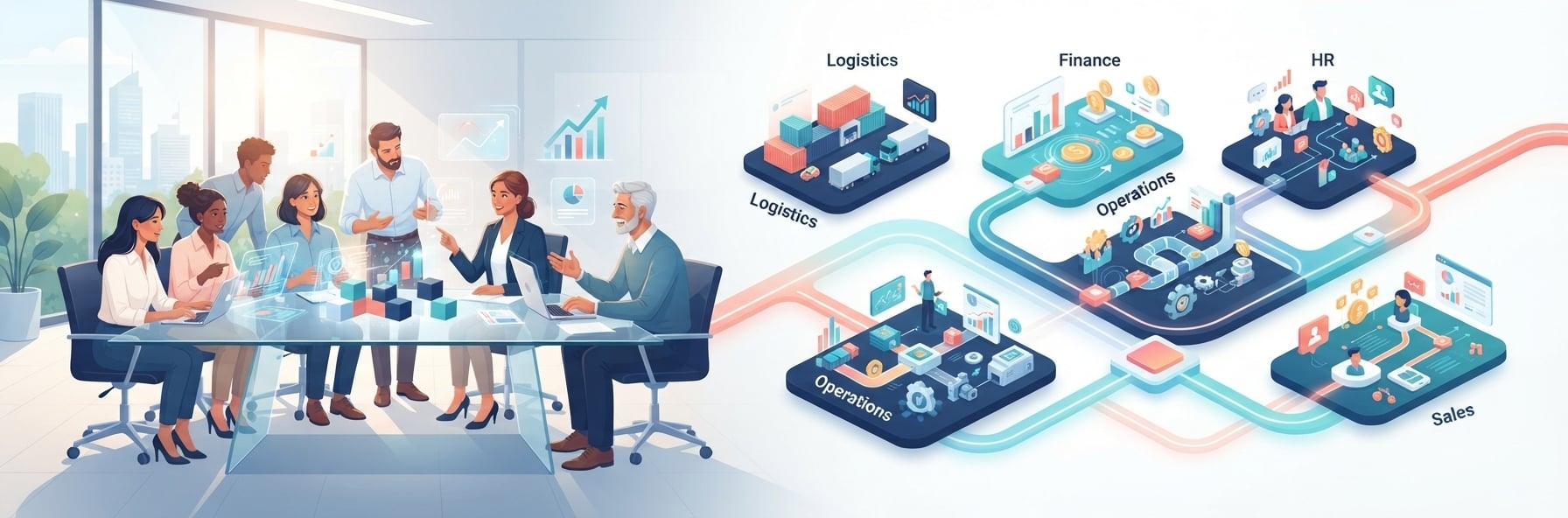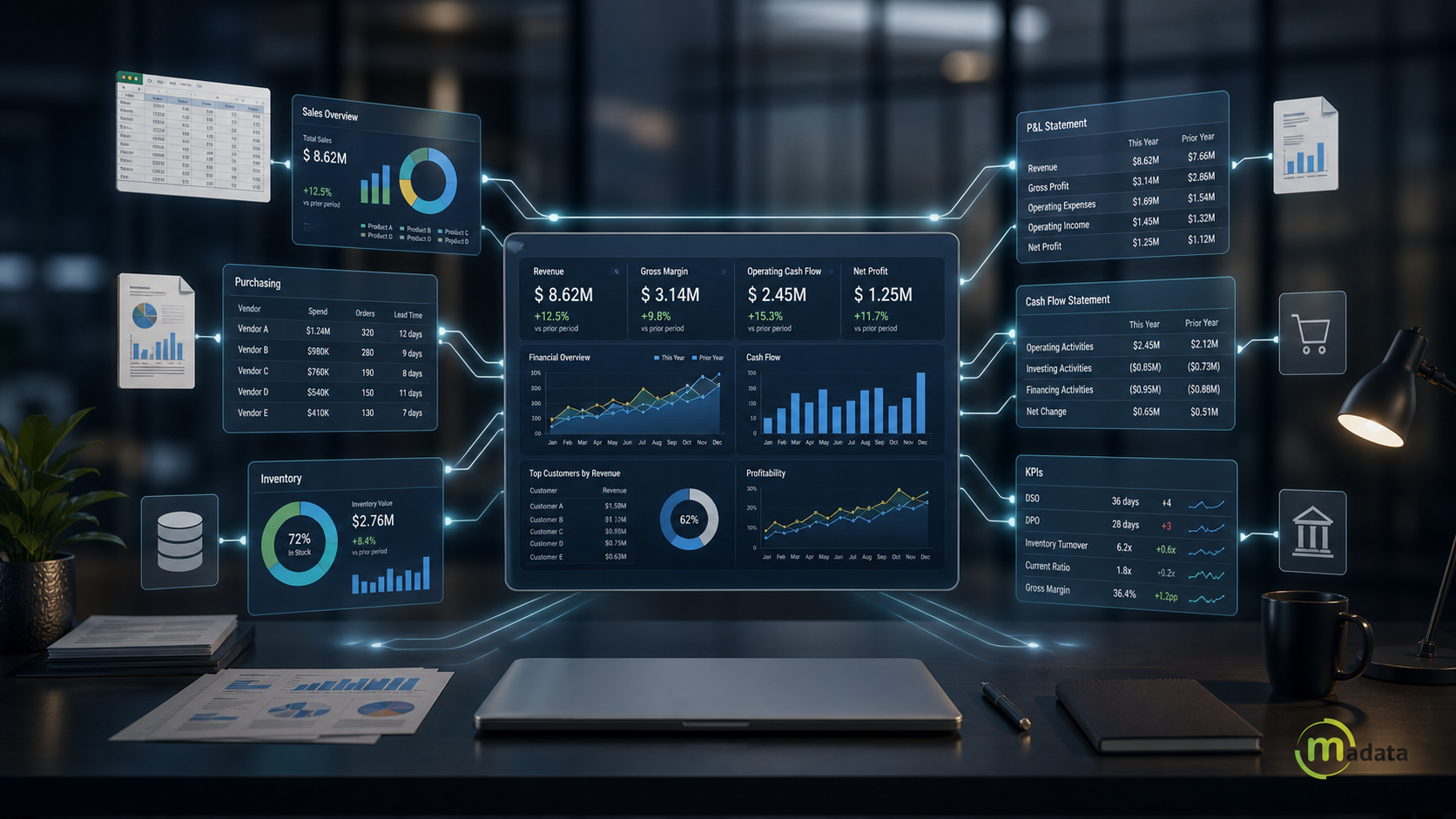


For many companies, SAP is at the heart of their operations. Through this system, they manage finance, procurement, inventory, manufacturing, sales, and the supply chain. However, as the business grows and technological needs change, simply keeping the ERP system running is no longer enough: it’s also necessary to assess whether it’s ready to meet the organization’s new challenges.
Evolving SAP involves reviewing the system’s architecture, custom developments, integrations, data quality, and the opportunities offered by technologies such as artificial intelligence.
Looking ahead to 2027, companies already using SAP have the opportunity to assess their technology environment, identify areas for improvement, and establish a strategy that allows them to get the most out of their investment.
Below, we present five aspects that IT and SAP managers should consider.
1. Review Custom Developments and Move Toward Clean Core
Over time, many companies incorporate custom developments to adapt SAP to their processes. While these modifications can address specific needs, they can also increase the complexity of the technology environment.
When there are too many customizations, maintaining the system, applying updates, and incorporating new features can require more effort and time.
This iswhere the concept of Clean Corecomes into play —a strategy that aims to keep the SAP core as standardized as possible, reducing unnecessary modifications and favoring extensions that facilitate its evolution.
What should your company review?
- Identify custom developments that are no longer in use.
- Assess which ones continue to add value to operations.
- Document modifications and technical dependencies.
- Analyze extension alternatives before undertaking new developments.
- Establish criteria for managing future modifications.
The goal is not to eliminate all customizations, but to maintain a more organized, sustainable environment that is ready to evolve.
2. Prepare SAP to Incorporate Artificial Intelligence
Artificial intelligence is opening up new possibilities for companies that use SAP. From assistants that facilitate access to information to agents capable of supporting various business activities, its potential depends on how well-prepared the technological environment is.
However, integrating AI requires more than just enabling a tool. It is necessary to review the quality of the data, integrations, permissions, and processes in which it will be used.
Before moving forward, it’s worth asking:
- Is the information in SAP reliable and well-organized?
- Do the systems exchange data correctly?
- Which processes could benefit from intelligent assistants or agents?
- What information can each solution access?
- Which actions require human authorization?
It’s also important to distinguish between the artificial intelligence capabilities available within the SAP ecosystem and external agents that can be integrated with business applications.
A well-defined strategy allows you to identify specific use cases and avoid implementing technology without an operational goal.
3. Strengthen SAP Governance and Architecture
As an organization grows, its SAP environment can become more complex. New modules, integrations, custom developments, and users create dependencies that need to be managed in a structured way.
Without a governance strategy, problems can arise, such as unnecessary permissions, changes made without sufficient documentation, or integrations that rely on the knowledge of just a few people.
To reduce these risks, it is important to review:
- The current architecture and its components.
- User roles and permissions.
- Integrations between SAP and other applications.
- Documentation of developments and modifications.
- The processes for approving technological changes.
A well-managed architecture facilitates decision-making and allows SAP to evolve without losing control over its components.
4. Evaluate the Evolution Strategy for SAP ECC and SAP S/4HANA
Companies still using SAP ECC should evaluate their technology strategy and analyze their options for evolving their environment.
The transition to SAP S/4HANA is not merely a matter of upgrading to a new version. It requires reviewing processes, custom developments, integrations, infrastructure, and business objectives.
Among the alternatives that can be evaluated are:
Conversion to SAP S/4HANA: This allows you to transform an existing SAP environment while retaining part of its structure and processes, subject to technical feasibility.
New implementation: This allows you to redesign processes and adopt a new configuration tailored to the organization’s needs.
RISE with SAP: This offers a transformation model toward SAP Cloud ERP Private Edition, with services and components that must be evaluated based on each company’s specific scenario.
The decision depends on the system’s current state, the level of customization, the infrastructure, and the transformation objectives. The key is to conduct an assessment that establishes a realistic roadmap, identifies risks, and plans the next steps.
5. Having Specialized Support to Maintain and Evolve SAP
An SAP environment requires more than just incident support. It also requires specialists capable of understanding your processes, managing changes, optimizing developments, and addressing the needs that arise as the business evolves.
Therefore, it is important to assess whether the current support model has the necessary capabilities to support upcoming projects.
An SAP AMS service can help by providing:
- Functional and technical support at various levels.
- Corrective, preventive, and evolutionary support.
- Change and update management.
- Support for ABAP integrations and developments.
- Monitoring through service level agreements (SLAs).
- Access to specialists with experience in the SAP ecosystem.
The goal is for support to go beyond simply resolving problems and instead help keep the environment ready for technological and operational changes.
What should your company review before 2027?
Before defining new initiatives, IT and SAP managers can conduct an assessment of their current environment.
| Area | Key Question |
|---|---|
| Clean Core | Are our custom developments still necessary and properly documented? |
| Artificial Intelligence | Do we have the data, integrations, and controls in place to incorporate AI? |
| Governance | Do we have a properly managed architecture, roles, and permissions? |
| Evolution | Do we have a defined strategy for SAP ECC or SAP S/4HANA? |
| Support | Does our AMS model have the necessary capabilities to support these changes? |
Identifying gaps allows us to prioritize initiatives and establish a technology roadmap aligned with business objectives.
How does Madata support the evolution of your SAP environment?
At Madata, we know that every organization has a unique SAP environment. That’s why, before proposing changes, it’s important to understand how your operations work, which systems you use, and what your key needs are.
We have over 20 years of experience in the SAP ecosystem and support companies through consulting services and specialized support.
Through our SAP AMS services, we provide functional and technical support, corrective, preventive, and evolutionary support, change management, updates, and support for ABAP integrations and developments.
We also have certified consultants and a flexible service model based on hourly packages or a monthly flat rate, backed by service level agreements.
Our goal is to help organizations keep their SAP systems aligned with their operational needs and prepare them to continue evolving.
Is your company already evaluating how to evolve its SAP environment by 2027?
Let’s discuss your operational needs and discover how we can help you prepare your platform for the challenges ahead.
Schedule a conversation with our team: https://meetings.hubspot.com/paulina-reyes2