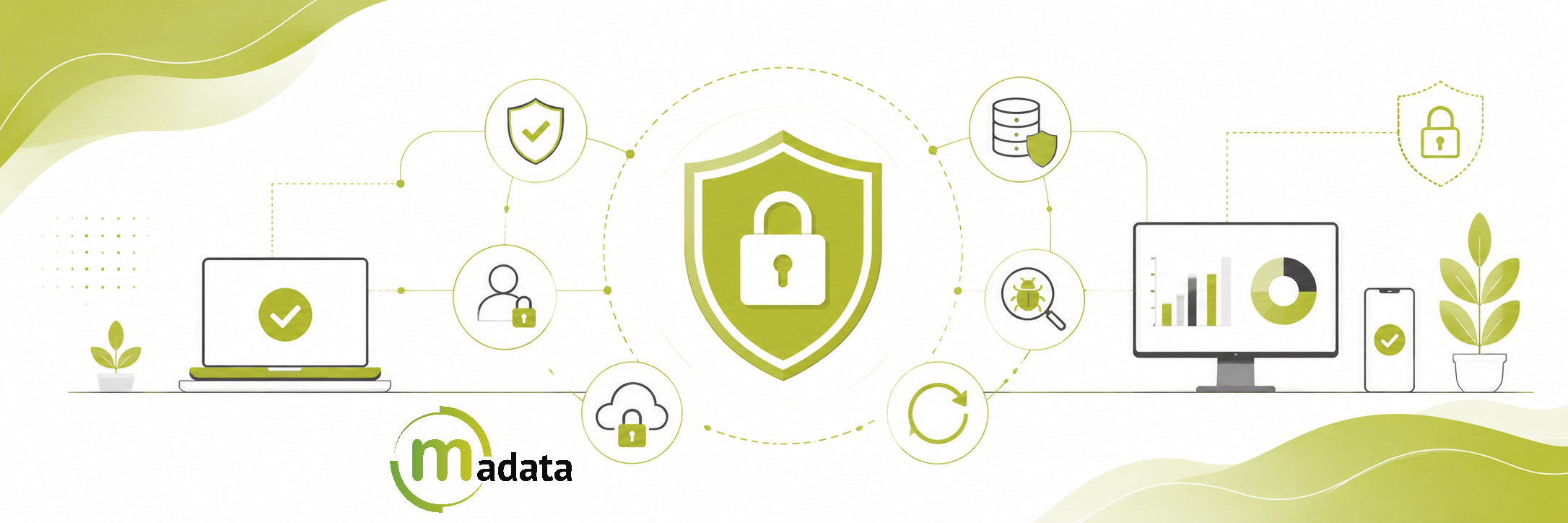
The protection of corporate data and business continuity depend on a comprehensive cybersecurity assessment that goes beyond basic, reactive tools
Why should cybersecurity be assessed as a business risk?
In today’s business environment, cybersecurity cannot be treated solely as an IT responsibility. It is a business risk that directly impacts operations, business continuity, reputation, and financial results. When a security incident occurs, the consequences extend beyond the technological realm: they can result in financial losses, regulatory penalties, operational disruptions, and damage to the trust of customers and business partners.
For leaders such as IT directors, CFOs, and CEOs, it is essential to understand that cybersecurity must be approached as a risk management and mitigation strategy. This involves assessing which assets are critical to the organization, which threats pose the greatest danger, and which vulnerabilities could be exploited. Only with this comprehensive view is it possible to make informed decisions about where to invest and which capabilities to prioritize.
Adopting this perspective allows organizations to align technological protection with strategic business objectives. Instead of purchasing isolated solutions, organizations can build a security architecture tailored to their actual needs—one designed to protect what truly matters: critical information, essential infrastructure, and the ability to operate without disruption.
What should a cybersecurity service for businesses include?
A comprehensive cybersecurity service is not limited to installing antivirus software or firewalls. It must include a set of coordinated capabilities that cover all stages of the security management cycle: from initial diagnosis to incident recovery. This includes identifying vulnerabilities, proactively protecting assets, continuous monitoring, early threat detection, and rapid response capabilities.
For organizations with operations in Mexico and the United States, it is essential that the provider understands the regulatory context of both markets and has proven experience in cross-border environments. Bilingual capabilities and knowledge of the region’s specific challenges are differentiating factors that facilitate implementation and ongoing support.
In addition, a robust service must be scalable and adapt to the company’s changing needs. It must offer expert support, proactive monitoring, and ongoing maintenance to minimize downtime. The combination of advanced technology, well-defined processes, and specialized talent is what guarantees effective and sustained protection over time.
The 4 Key Impacts: Financial Risk, Data, Infrastructure, and Business Continuity
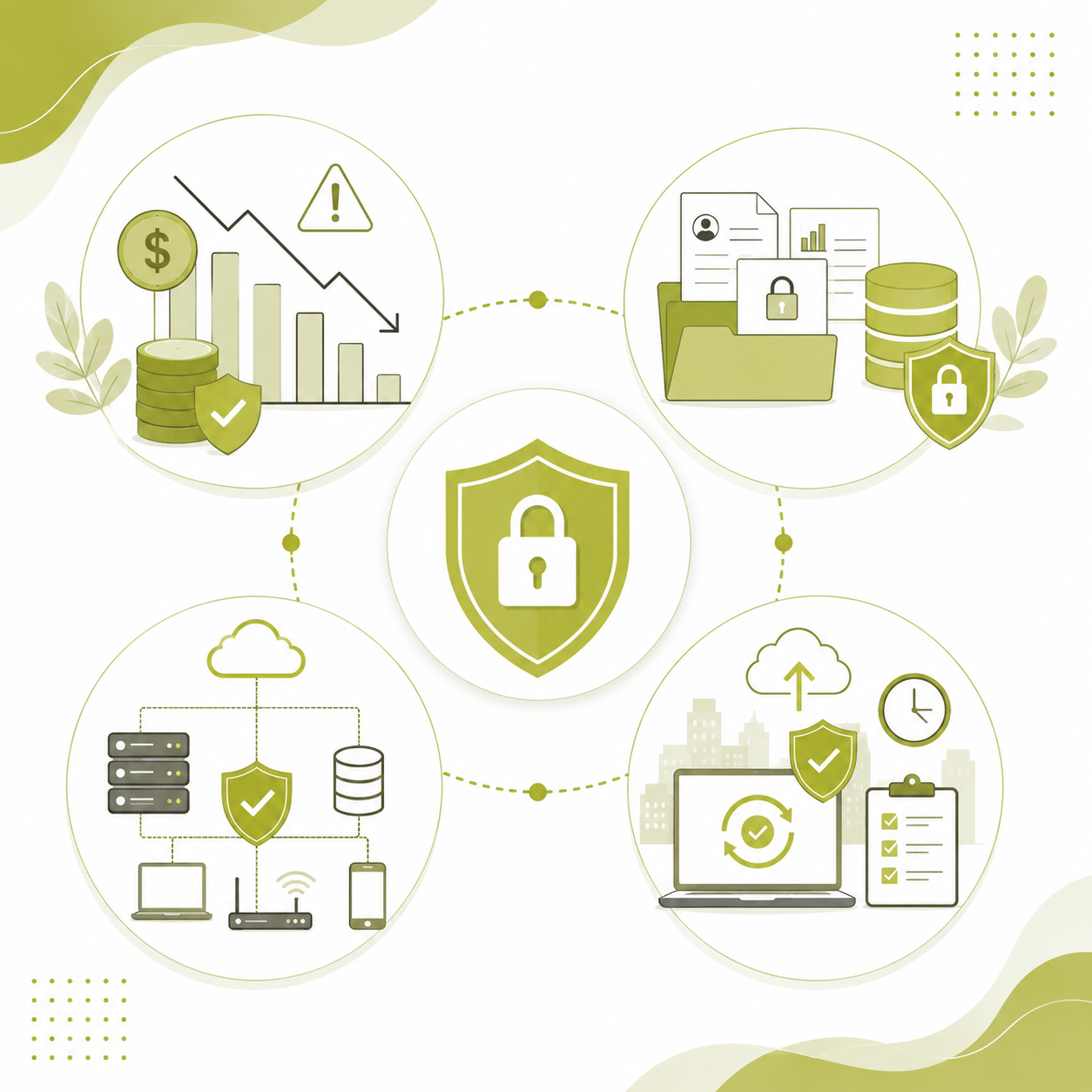
To evaluate any cybersecurity capability, it is necessary to understand how it impacts four critical areas of the business. The first is financial risk: every security measure must help reduce exposure to financial losses resulting from fraud, sanctions, fines, or costly disruptions. Asking which financial risks the measure helps manage allows you to prioritize investments based on potential return and capital protection.
The second area is data protection. Information is one of the most valuable assets of any organization, and its compromise can have devastating consequences. It is essential to identify what type of information each measure protects: customer data, financial information, intellectual property, or regulatory compliance records. This clarity allows for the design of specific controls for the most sensitive data.
The third area is infrastructure. Modern companies operate in hybrid environments that combine on-premises applications, cloud services, and remote connections. Assessing which part of the infrastructure each security measure covers helps identify gaps and ensure that all critical components are protected: servers, databases, networks, user devices, and access points.
Finally, the fourth area is business continuity. Beyond preventing incidents, it is essential to have capabilities that enable operations to be maintained or quickly restored in the event of a security incident. This includes automatic backups, disaster recovery plans, and pre-established response protocols. An effective strategy minimizes the impact of any incident and ensures that the business can continue to operate normally.
How to Assess the Protection of Data, Users, and Infrastructure?
Effective protection begins with a comprehensive assessment of the technological environment. Before implementing any measures, it is necessary to identify all systems, assets, and users that are part of the infrastructure. This includes physical and virtual servers, business applications, databases, mobile devices, and workstations. It is also essential to map the IT team’s current capabilities and existing security processes.
Once the assessment is complete, the protection strategy must address three main components. First, data protection through access controls, encryption, information classification, and policies for handling sensitive data. Second, protecting users—both local and remote—by implementing multi-factor authentication, identity management, and a Zero Trust approach that does not assume implicit trust in any device or user.
The third component is the protection of hybrid infrastructure. This requires solutions that function consistently in on-premises, cloud, and hybrid environments. The security architecture must be designed to be agile, scalable, and capable of adapting to changes in the infrastructure without compromising protection. Evaluating these capabilities involves verifying that the provider has experience with virtualization, cloud solutions, and modern architectures that support business growth.
Detection and Monitoring: How Prepared Is Your Company Against Threats?
Early threat detection is essential to minimizing the impact of any security incident. Preventive measures alone are not enough; you need continuous visibility into what is happening within the infrastructure. This involves real-time monitoring, analysis of anomalous behavior, logging of critical events, and automatic alerts for suspicious activity.
A robust monitoring capability must include centralized management of the security infrastructure, deployment of updates and patches, regular vulnerability testing, and continuous optimization of controls. The goal is to keep the security posture up to date in the face of constantly evolving threats. Evaluating these capabilities involves verifying whether the provider has specialized teams, recognized certifications, and processes based on international standards.
In addition, it is important to consider preventive social engineering as part of the security approach. Threats do not come solely from technological attacks; many incidents begin with the manipulation of users through phishing emails, fraudulent calls, or deceptive tactics. Training staff and establishing awareness protocols provides an additional layer of protection that complements technological measures.
Response, Support, and Recovery: How to Minimize the Impact of an Incident
Even with the best preventive measures, no organization is completely immune to security incidents. Therefore, a comprehensive strategy must include response and recovery capabilities designed in advance. This includes documented protocols, trained teams, and technologies that enable rapid and precise action in the event of any incident.
Automatic and secure backups are the foundation of any recovery plan. Critical information must be backed up regularly to secure locations, with encryption and strict access controls. Additionally, it is essential to periodically test recovery processes to ensure they function correctly when needed. The ability to restore systems and data in the shortest possible time is a key indicator of the maturity of a cybersecurity strategy.
Response and recovery strategies must be based on recognized international standards. Madata, for example, designs its protocols based on ISO 27001 for information security management, ISO 22301 for business continuity, and ISO 20000 for IT service management. These certifications ensure that processes are aligned with global best practices and that the organization has a reliable partner to handle incidents of any scale.
Checklist: How to Evaluate and Compare a Cybersecurity Service?
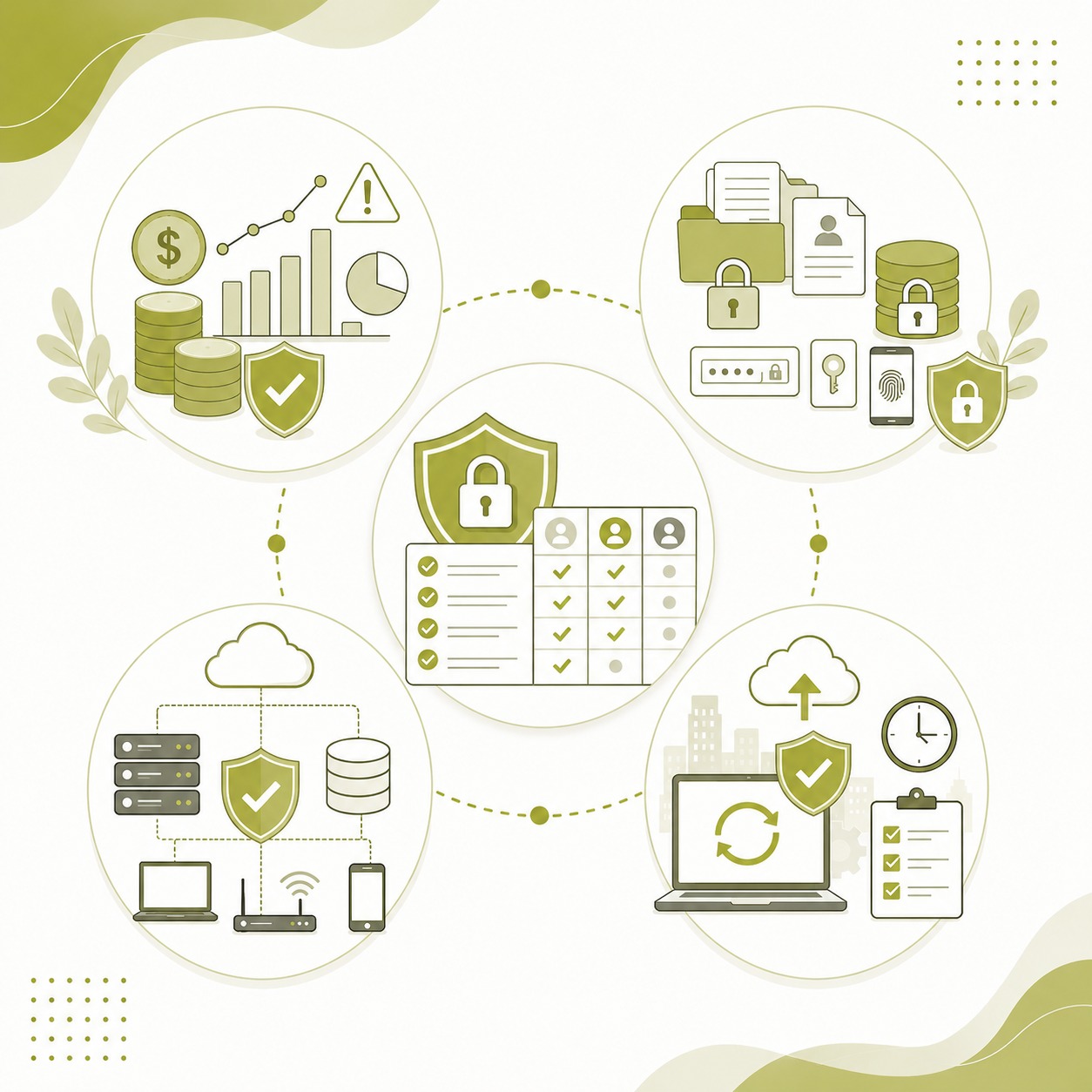
To facilitate the evaluation process, it is helpful to use a matrix that allows you to compare the organization’s needs with the capabilities offered by a cybersecurity service provider. Below is a checklist structured around four critical areas: financial risk, data protection, infrastructure, and operational continuity.
In the risk assessment and identification category, verify whether the provider conducts a comprehensive analysis of systems, personnel, and assets; identifies specific vulnerabilities and threats; and provides clear documentation of the current environment. Regarding financial risk, assess whether the provider helps prevent losses from fraud or incidents; for data protection, confirm that it identifies critical information; for infrastructure, ensure that it covers all components; and for business continuity, verify that it establishes the foundation for response plans.
For data, user, and infrastructure protection, confirm the implementation of access controls and encryption, multi-factor authentication, and a Zero Trust approach, as well as support for hybrid environments. For monitoring and detection, verify the existence of continuous real-time monitoring, centralized security management, regular vulnerability testing, and user awareness programs.
In the response and recovery category, evaluate whether the provider offers automatic and secure backups, documented incident response protocols, proven recovery processes, and alignment with standards such as ISO 27001, ISO 22301, and ISO 20000. Finally, consider operational aspects such as experience in Mexico and the United States, bilingual capabilities, technical team certifications, service scalability, and ongoing support.
Using this checklist allows you to conduct a structured evaluation, identify gaps in your current protection, and make informed decisions about which provider is best aligned with your business’s actual needs.
Enterprise Cybersecurity in Mexico and the United States: From Technological Protection to Risk Management
Organizations operating in Mexico and the United States face unique cybersecurity challenges. In addition to global threats, they must comply with country-specific regulations, manage geographically distributed teams, and coordinate operations in complex network environments. Therefore, having a partner with a deep understanding of both markets represents a strategic advantage.
Madata has over 20 years of experience operating in Mexico and the United States, offering cybersecurity services designed to protect critical infrastructure, sensitive data, and business operations. Its comprehensive approach combines advanced technology, processes based on international standards, and specialized teams certified in ITIL and ISO 20000. This expertise allows security architectures to be aligned with actual business needs, not just technical specifications.
Cybersecurity must evolve from being viewed as a technology expense to becoming a strategic component of enterprise risk management. When evaluating providers, it is essential to seek out those that offer not only tools but also a comprehensive vision that protects against financial risk, safeguards critical data, secures the entire infrastructure, and ensures operational continuity. With the right approach, organizations can transform cybersecurity into a source of trust, resilience, and sustainable competitive advantage.
Make Cybersecurity a Strategic Decision
Protecting your business isn’t just about reacting to a threat. It’s about understanding your risks, strengthening your infrastructure, and being prepared to respond when it matters most.
Assess your organization’s level of protection today and discover what cybersecurity capabilities you need to protect your data, infrastructure, and operational continuity.
Let’s talk about cybersecurity—schedule as much time as you need: