

Discover how VMware revolutionizes IT infrastructure management for enterprises seeking scalability, operational efficiency and modernization of their technology environments.
The Power of Virtualization in the Age of Digital Transformation
Virtualization is no longer just a technology trend, but a fundamental pillar of enterprise digital transformation. In an environment where exponential data growth, the need for constant innovation and security demands are intensifying daily, organizations face the challenge of evolving from fragmented infrastructures to agile, unified platforms.
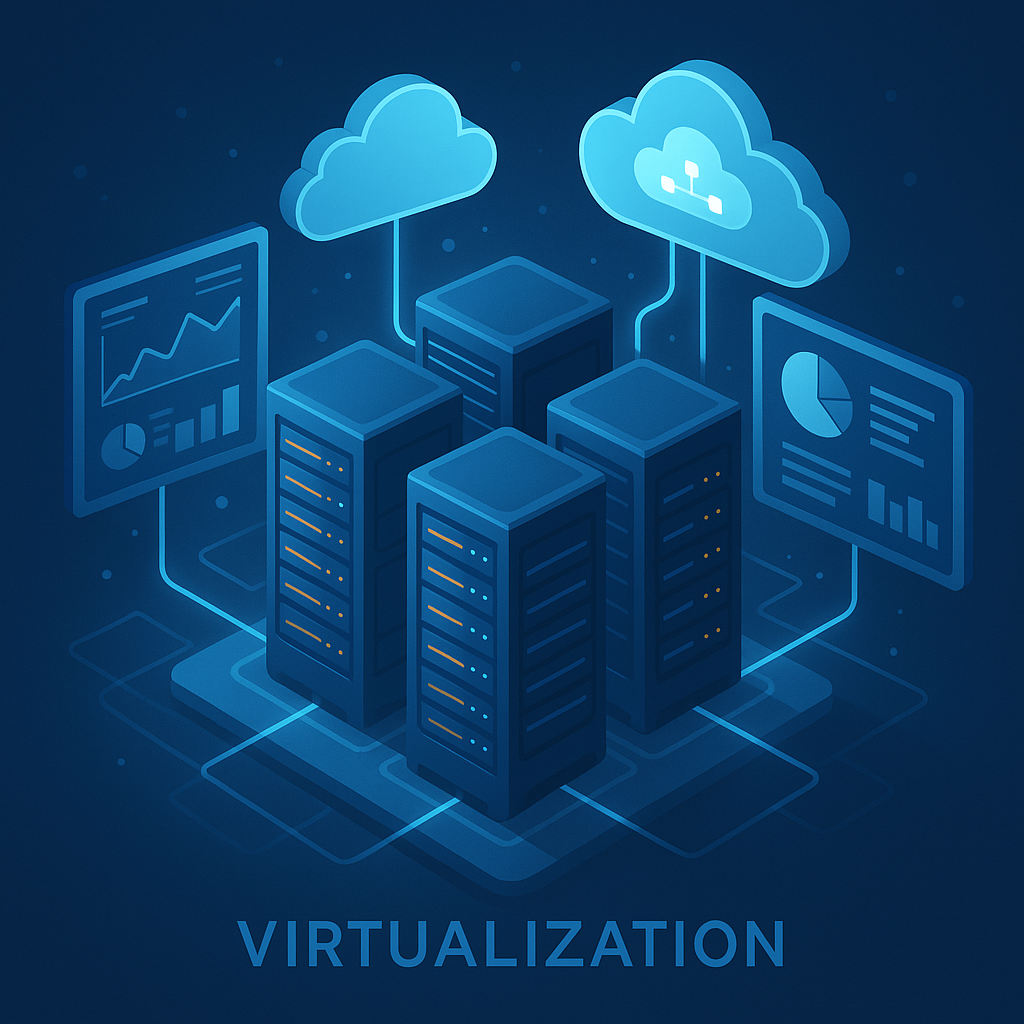
VMware vSphere Foundation and Cloud Foundation represent the foundation of this transformation, enabling enterprises to virtualize all their compute, storage and networking resources in an integrated manner. This software-defined infrastructure (SDDC) eliminates traditional silos that create operational inefficiencies and limit visibility into technology resources. By consolidating management under a unified platform, organizations gain full control over their environment, reduce operational complexity and free their IT teams to focus on strategic initiatives.
Total virtualization not only improves the efficiency of existing resources, but also lays the foundation for adopting emerging technologies such as artificial intelligence, advanced analytics and cloud-native applications. For IT directors and managers looking to prepare their organizations for the future, virtualization with VMware offers a clear path to modernization without compromising the stability of today's critical systems.
Optimizing Resources and Reducing Operating Costs
One of the biggest challenges facing IT and financial leaders is controlling runaway operational cost growth while maintaining optimal service levels. Traditional fragmented infrastructures generate unnecessary expenses in underutilized hardware, duplicate licensing, and staff dedicated to repetitive manual tasks that could be automated.
VMware's approach directly addresses this challenge through resource consolidation and intelligent automation. By virtualizing all infrastructure components, enterprises can maximize the utilization of each server, significantly reduce the physical space required in the data center and lower associated energy costs. The ability to dynamically provision resources based on actual demand eliminates the traditional over-provisioning that characterizes physical environments.
The automation built into Cloud Foundation dramatically reduces provisioning times and minimizes human errors that typically lead to costly incidents and downtime. IT teams can set management policies that run automatically, freeing up human resources for higher-value projects. For CFOs and IT managers, this combination of consolidation and automation translates into measurable and sustainable ROI, with operating cost reductions of up to 40% according to several industry case studies.
Scalability and flexibility for business growth
Business growth demands an infrastructure that can scale in an agile manner without operational disruptions or massive unplanned investments. Organizations operating with legacy systems face severe limitations when they need to increase capacity, add new applications or expand into new markets. This technological rigidity becomes a direct brake on growth ambitions.
The hybrid cloud model proposed by VMware offers the flexibility to scale resources according to business needs, while maintaining the control and regulatory compliance required by enterprises. The ability to operate an on-premise private cloud seamlessly integrated with public cloud services allows organizations to take advantage of the best of both worlds: the security and control of the private infrastructure with the elasticity and global reach of the public cloud.
This hybrid architecture is especially valuable for companies that handle sensitive data or are subject to strict data residency regulations, such as bi-national operations between Mexico and the United States. The ability to rapidly deploy new applications, elastically scale resources during spikes in demand, and strategically distribute workloads across geographies provides business leaders with the agility needed to compete effectively in dynamic markets.
Integration with SAP environments and business-critical systems
For organizations operating critical ERP systems such as SAP S/4HANA, SAP Business One or SAP ECC, the underlying infrastructure plays a critical role in performance, availability and innovativeness. The complexity of these enterprise environments requires a platform that not only supports today's technical demands, but also facilitates migrations, upgrades and the adoption of new functionality without operational risk.
VMware has been specifically certified and optimized to run SAP workloads with the highest level of performance and reliability. Virtualization allows organizations to consolidate multiple SAP instances (development, quality, production) on shared infrastructure without compromising isolation or security. This is especially valuable during SAP S/4HANA migration projects, where parallel environments are often required for extensive testing before the final transition.
VMware Cloud Foundation's integration with SAP environments facilitates disaster recovery and high availability strategies that are critical for systems running critical finance, human resources, inventory and supply chain processes. Replication, snapshot and automated recovery capabilities minimize the risk of data loss and reduce recovery time objectives (RTO) and recovery point objectives (RPO) to levels that were previously only achievable with significant investments in duplicate infrastructure. For SAP managers and IT directors, this symbiosis between virtualization and ERP represents a tangible competitive advantage.
Implementation strategies and best management practices
The transition to a virtualized infrastructure and hybrid cloud model with VMware requires a well-planned strategy that considers both technical and organizational aspects. Experience shows that the most successful implementations begin with a thorough assessment of the current state of the infrastructure, identifying critical applications, dependencies and migration priorities based on business value.
Best practices recommend adopting a phased approach: start with non-critical workloads to develop operational expertise, establish management processes and validate capabilities before migrating mission-critical systems. It is critical to define clear governance policies, configuration standards and change management procedures from the outset to ensure consistency and control as the platform evolves. Automation should be implemented gradually, clearly documenting each automated process and establishing human review points where necessary.
IT team training is a critical factor that is often underestimated. Investing in formal VMware certification for technical staff generates significant returns by reducing incident resolution times and improving the ability to continuously optimize. Establishing clear SLAs, performance metrics and executive dashboards allows IT leaders to demonstrate the value of the platform and justify additional investments in modernization.
For organizations operating in Mexico and the United States, working with certified partners who understand the specific regulatory requirements of both countries, provide bilingual support and have proven experience with complex migrations can make the difference between a successful implementation and a problematic initiative. The combination of robust VMware technology with specialized consulting and local support ensures that infrastructure transformation becomes a catalyst for sustainable business growth.